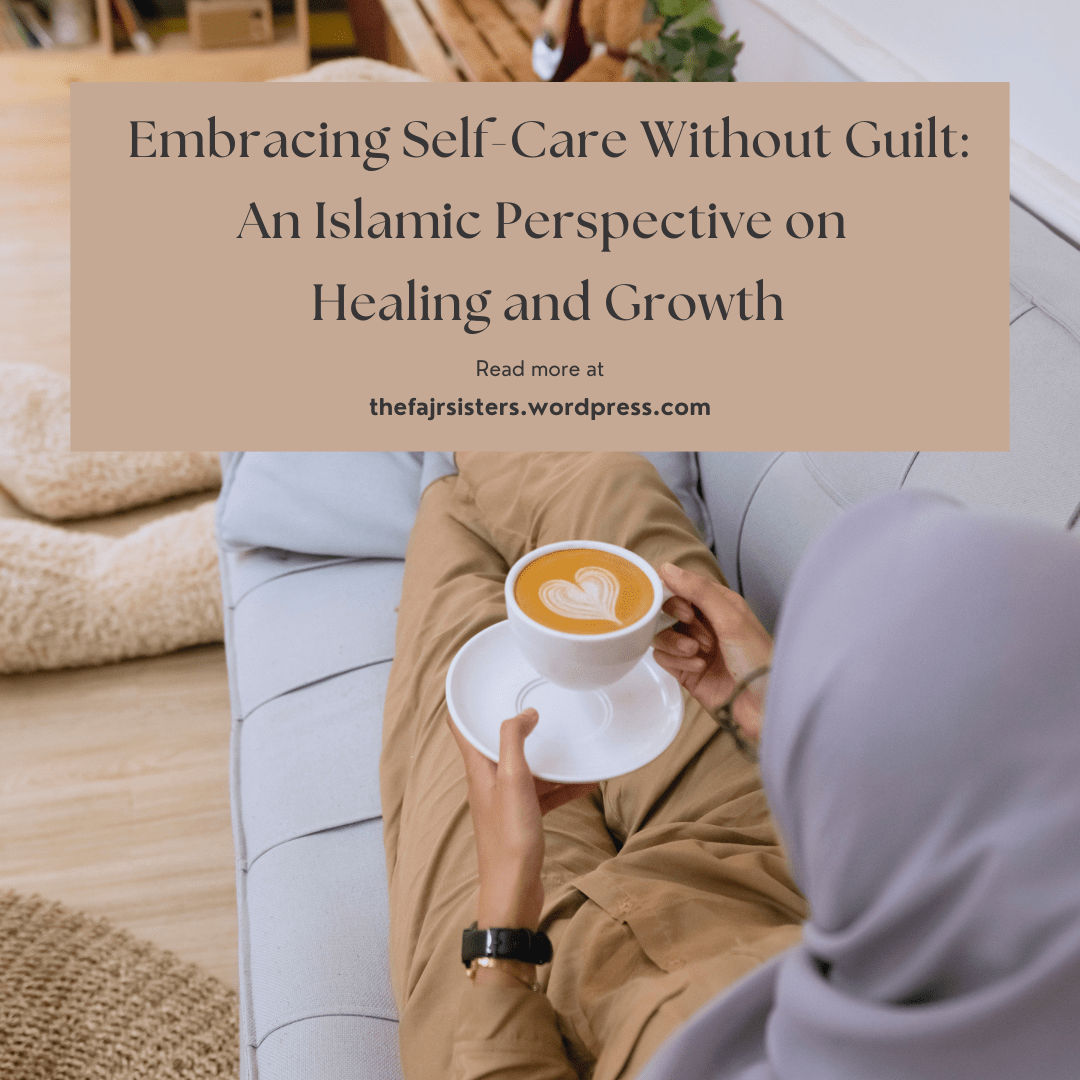
In a fast-paced world where expectations often weigh heavily on women, the concept of self-care can sometimes feel like an indulgence rather than a necessity. For mothers and caregivers, this feeling is compounded by societal pressures and the ever-present “mom guilt.” However, the importance of self-care is undeniable—not only for personal well-being but also for setting a healthy example for our families. This article explores the struggles of prioritising self-care through an Islamic lens, offering insights into overcoming guilt and embracing balance as a spiritual and practical act.
Understanding the Struggle: The Guilt of Prioritising Yourself
A common challenge many women face is the guilt associated with taking time for themselves. The relentless pace of modern life, combined with cultural and societal norms, often pushes women to overextend themselves. This guilt can stem from the feeling that prioritising personal needs is selfish or from the fear of neglecting family responsibilities.
Linda, a sister who voiced her concerns in The Fajr Sisters Unpack Your Heart workshop, highlighted this struggle beautifully:
“How do we deal with that feeling of guiltiness, seriously, just to say, ‘You know what, it’s my time to take care of myself,’ even when the body and soul are screaming for it? How do we change this pathway in our brain and break the patterns we’ve been used to?”
This struggle is amplified by societal ideals, such as the image of the “perfect mom” who seamlessly balances family, work, and personal aspirations—a standard that often feels unattainable.
Reframing the Mindset: You Are Enough
A critical step in overcoming guilt is shifting one’s mindset. Remember that Allah says you are enough. He created mankind to have mercy on mankind. He loves you, and you are worthy of His love. That in and of itself should be enough for you to take a step back and recognise your value.
Our Creator shares with us in the Qur’an:
“except those shown mercy by your Lord—and so He created them” (Surah Hud: 119)
“Indeed, Allah is to the people Kind and Merciful.” (Surah Al-Baqarah: 143)
By grounding ourselves in this divine love and recognising that we are valuable in Allah’s eyes, we can begin to shed the weight of unrealistic expectations.
The Ripple Effect of Self-Care
Taking time for self-care is not just a personal act; it is a lesson for those around us, especially our children. Children learn by observing their parents. If a mother constantly prioritises others at the expense of her own well-being, her children may internalise feelings of inadequacy, thinking they are the cause of her stress or unhappiness.
If you don’t take time out and you’re constantly feeling inadequate, your children learn from that. They may think, ‘Mommy’s not happy because of me.’ This misunderstanding can lead to cycles of perfectionism and anxiety in the next generation.
The Prophet Muhammad (peace be upon him) taught balance in all aspects of life. He said:
“Your body has a right over you.” (Bukhari 5199)
By caring for ourselves, we fulfil this teaching, modelling a balanced and healthy lifestyle that honours our trust (amanah) over our bodies.
Breaking the Cycle: Practical Steps to Balance
- Turn to Allah
Seek guidance and strength through prayer and reflection. Remember that Allah does not burden a soul beyond its capacity (Surah Al-Baqarah: 286).
- Acknowledge Your Needs
Recognise that your body, mind, and soul have rights over you. This acknowledgment is the first step toward creating a healthier balance in your life.
- Set Boundaries
Learn to say no when necessary and establish boundaries that protect your time and energy. Read more about boundary setting here: https://thefajrsisters.wordpress.com/2024/11/17/boundaries-the-key-to-a-full-cup-and-a-balanced-life/
- Practice Gratitude
Focus on the blessings in your life and the progress you make, no matter how small. Gratitude can shift your perspective and reduce feelings of inadequacy.
Conclusion
Self-care is not selfish—it is an act of love for yourself, a trust you fulfil, and a means to better serve your family and community. By prioritising your well-being, you honour the rights Allah has given you and set a powerful example for those around you.
The journey to balance and healing begins with the realisation that you are enough, as Allah created you to be. Life is a series of imperfect moments, but through self-compassion and reliance on Allah, you can find peace and purpose.
Take the step today to break the cycle of guilt and embrace the beauty of self-care as an act of worship and gratitude—it is your right, your responsibility, and a path to spiritual and emotional harmony.
Join Us!
This article was inspired by the Unpack Your Heart workshop, which delved into nurturing a heart anchored in faith. Building on these insights, a new journey awaits with the 5 Ways to a Graceful Life workshop.
Explore five transformative elements—Vision, Values, Intention, Reflection, and Accountability—to reclaim calm, deepen purpose, and live gracefully. Through guided exercises and Islamic insights, this workshop will help you build resilience, inner peace, and a legacy of positive values. Join us to embrace life’s rhythm and cultivate grace in every moment.
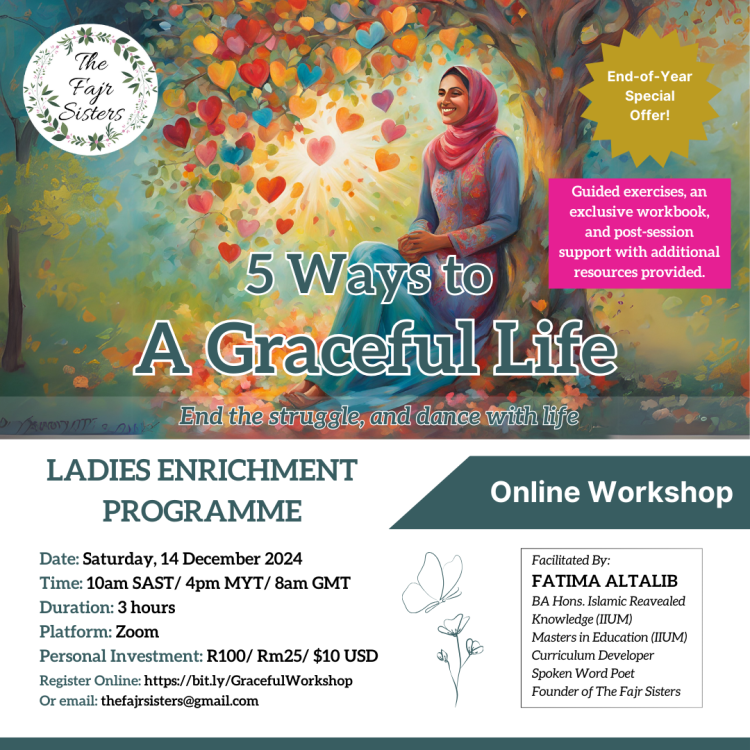
Sign up here: https://bit.ly/GracefulWorkshop
For more information, email us at: thefajrsisters@gmail.com
Looking forward to seeing you there!

Don’t forget to like, comment and subscribe to get the latest wholesome content sent directly to your inbox!
 The Fajr Sisters